
The Cabinet of Curiosities
How to style your home like a collector — and why the aesthetic is everywhere in 2026
The aesthetic rewriting interior design in 2026 is not a colour or a material. It is a mindset.
The cabinet of curiosities — wunderkammer in German, literally ‘wonder chamber’ — was a Renaissance phenomenon. Wealthy scholars, scientists, and aristocrats assembled rooms containing the most extraordinary objects they could find: fossils, shells, astronomical instruments, carved ivory, natural specimens, exotic minerals, mechanical devices, artworks. The collection was the display. The display was a statement about the collector’s worldview, their curiosity, their travels, their aesthetic intelligence.
In 2026, this concept has returned with striking force to mainstream interior design. ‘Grandma Chic’ — named as a defining 2026 trend by Emily Henderson, Carla Aston, and Carlton — is partly about the warmth and layered abundance of an older generation’s home. The ‘collected, not decorated’ discourse cited by Domino and StyleBlueprint is partly about this: homes that feel inhabited by someone with genuine interests, not just styled by someone following a mood board. The cabinet of curiosities aesthetic is where both of these trends point.
What Makes the Collector Aesthetic Different From Regular Styling
The collector aesthetic is fundamentally about specificity. Every object in a true collector’s display is there because of a specific decision: this object, not another of its type, for this reason. The specificity is visible even to a guest who knows nothing about the collector’s story — the presence of real decision-making is perceptible in a way that generic styling is not.
Generic home styling uses interchangeable objects: the neutral ceramic vase that appears in a thousand Instagram posts, the identical set of linen-spined books used as shelf filler, the eucalyptus spray in the same white vase that every interior stylist uses as a default. These objects are not wrong. They do not tell a story. The collector’s objects do.
The Principles of the Modern Cabinet of Curiosities
Accumulate slowly and deliberately
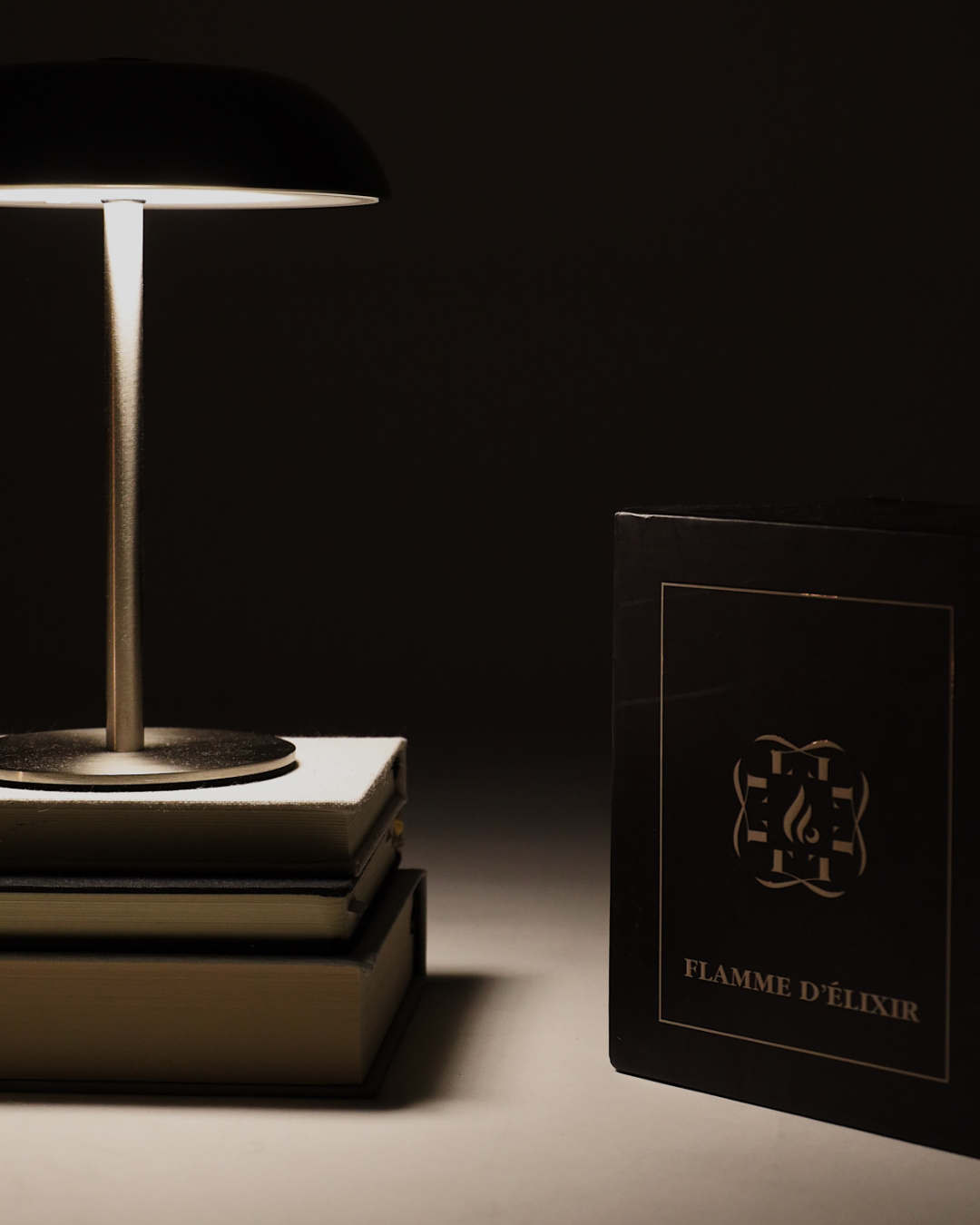
A genuine collection is not assembled in a weekend. The collector aesthetic requires time — objects acquired one at a time, from specific places, for specific reasons. The Flamme d’Élixir hand casted mineral finish vessel on a collector’s shelf was not purchased because it was the most readily available option; it was chosen because of its craftsmanship, its characteristics of a natural stone finish, its Bordeaux origin, its Grasse fragrance, and its formal reference to French architectural stone tradition. This specificity of reason is what makes the object part of a collection rather than part of a decoration.
Let materials tell multiple stories
The best cabinet of curiosities displays use materials that carry their own histories: natural stone with geological time embedded in its formation, aged brass bearing the patina of decades, raw ceramics with the fingerprints of their maker still visible in the surface, books with genuinely read spines. These materials speak to each other across the display — and they speak to any attentive guest.
Include at least one object that is genuinely surprising
The original wunderkammer always contained a unicorn horn (usually a narwhal tusk) — something that made viewers stop, question, and wonder. The modern collector’s shelf needs its equivalent: the object that does not immediately make sense, that rewards a question. A Flamme d’Élixir vessel in hand-finished sandstone is that object for many homes: immediately beautiful, but with enough story behind it — Bordeaux, Grasse, architectural stone reference, small-batch production — to reward the conversation it starts.
In Summery
The cabinet of curiosities aesthetic is inspired by the Renaissance Wunderkammer. It is an approach to interior design where every object has been chosen for its story, material, and individual character rather than its visual coordination with a scheme. A collected room built on this principle is never fully finished, never fully coordinated, and always more interesting than a room decorated to a brief. It is built slowly, one genuine object at a time.
Frequently Asked Questions
What is the cabinet of curiosities interior style?
The cabinet of curiosities style draws on the Renaissance tradition of assembling extraordinary objects in a curated display. In a modern home, it describes an interior populated by objects collected for specific reasons — provenance, material interest, personal meaning, formal beauty — rather than styled for visual composition alone. It is characterized by specificity, accumulation, and the sense of a genuine collector’s point of view.
Is the cabinet of curiosities trend maximalist?
Not necessarily. The collector aesthetic can operate across a wide range of density. From a single carefully chosen stone object on an otherwise bare shelf to a fully layered display of collected objects. The defining quality is not quantity but intention: every object is there for a specific reason, not as generic filler.
How do I start a cabinet of curiosities display at home?
Begin with one shelf or one surface. Remove everything generic. Add back only objects you can tell a specific story about: where they came from, who made them, why you chose them. Add new objects one at a time, slowly. The collection will develop its own visual language over months — that emergence is part of the aesthetic.
Leave a Reply