
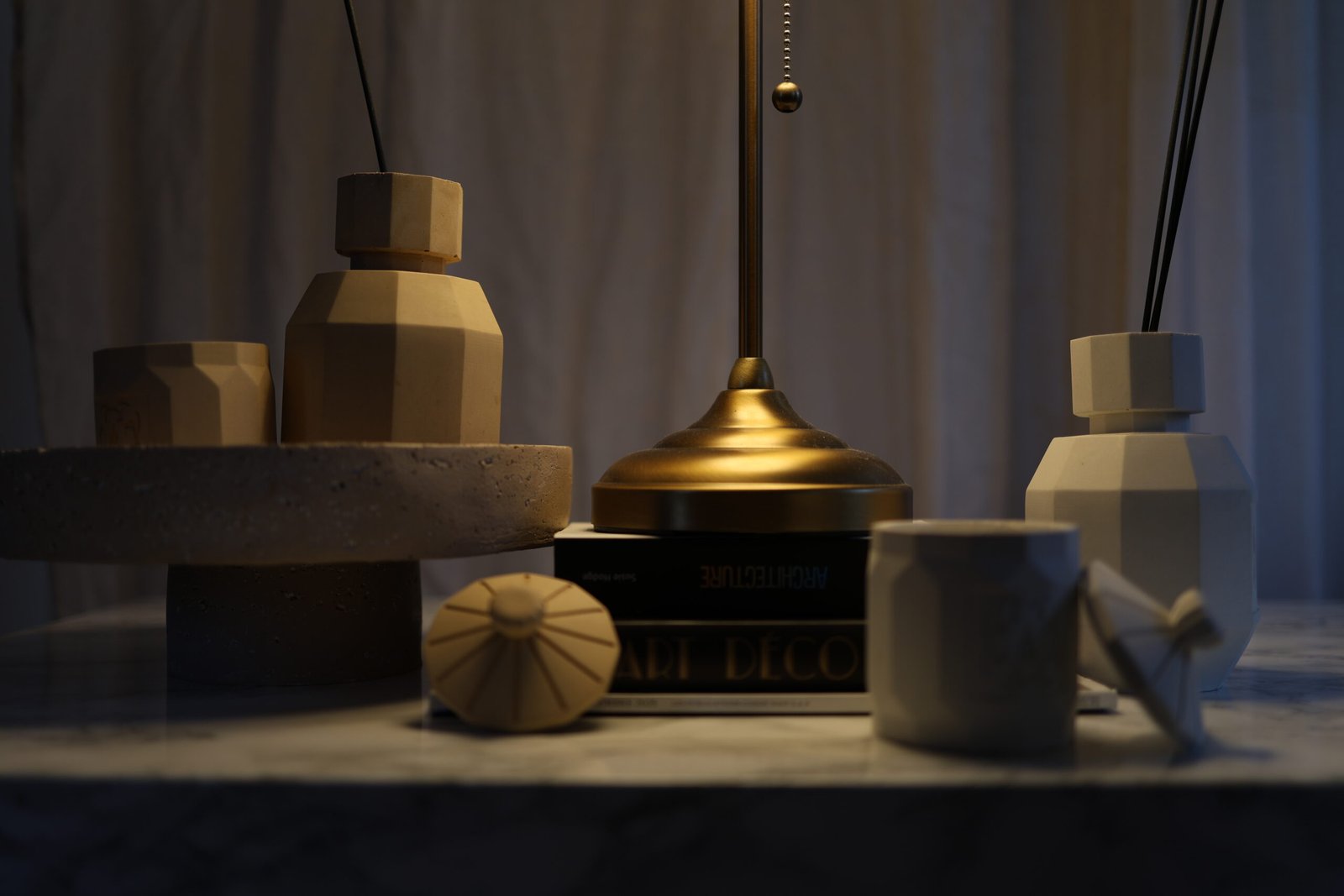
Design Objects Worth Keeping for Decades
A buyer’s guide to design objects that earn their place permanently — and how to identify them
Buy one perfect thing. Keep it forever. That is the only decorating rule that matters.
The Most Expensive Home Décor Is Not the Most Expensive Object You Buy
There is a moment most people experience somewhere in their thirties.
They look around a home they have spent years and real money decorating — and they feel nothing. Not dissatisfaction exactly. Just a quiet absence of meaning. Objects everywhere. Character nowhere. No design objects worth keeping. This is what fast decorating produces. Not a bad home. An empty one.
In 2026 the conversation around best home decor investment has shifted significantly — away from volume and toward permanence. Every serious interior designer, every considered collector, and every homeowner who has been through the cycle of replacing and replacing again has quietly arrived at the same conclusion. Fewer objects. Better chosen. Kept longer.
This is the investment piece philosophy applied to home objects. And this guide explains exactly how to apply it.
The Real Cost of Replacing Everything
Run the numbers honestly.
If you buy fifteen to twenty mid-range home objects per year — a candle here, a vase there, a cushion, a frame, a diffuser — and each one lasts two to four years before you update or replace it, the cumulative spend over a decade is significant. More significant than the spend is what you are left with.
The investment piece approach distributes the same money differently. One object chosen with real care. Made from real materials. By a maker with a traceable story. That object sits on your shelf for twenty years and becomes more interesting, not less, as time passes. That is the arithmetic of considered decorating. And once you understand it, you cannot unsee it.
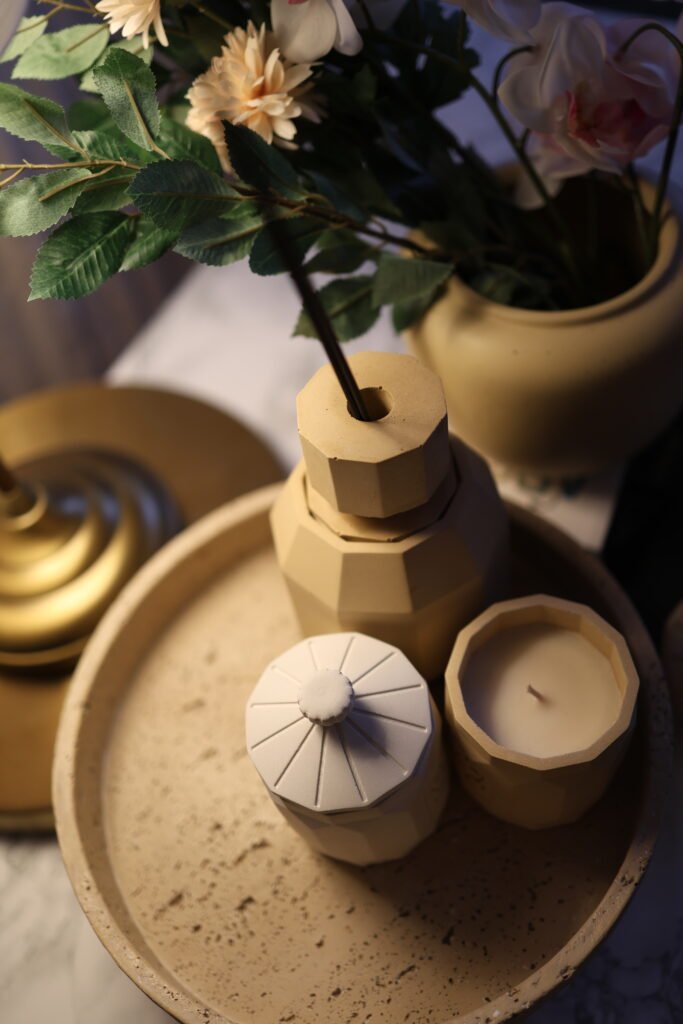
Four Signals That Tell You an Object Is Worth Keeping
Most people make home decorating decisions based on visual appeal alone. That is not wrong — beauty matters. But beauty without substance produces objects that stop working the moment the trend that made them beautiful moves on.
When thinking about the best design objects to buy, most people focus on appearance alone. These four signals go deeper than appearance and will reliably separate lasting home decor objects from disposable ones.
Signal 1: The Material Is What It Claims to Be
Pick the object up.
Does it have the weight you expect? Does it have the temperature of its stated material? Natural stone is cool to the touch and heavy in the hand. Real ceramic has mass and variation. Solid wood has grain you can feel at the edges, not just see on the surface.
If an object is lighter than it should be, uniform where it should vary, or warm to the touch when it claims to be stone — it is not what it says it is. This is the fastest and most reliable quality test available to any buyer. No expertise required. Just attention.
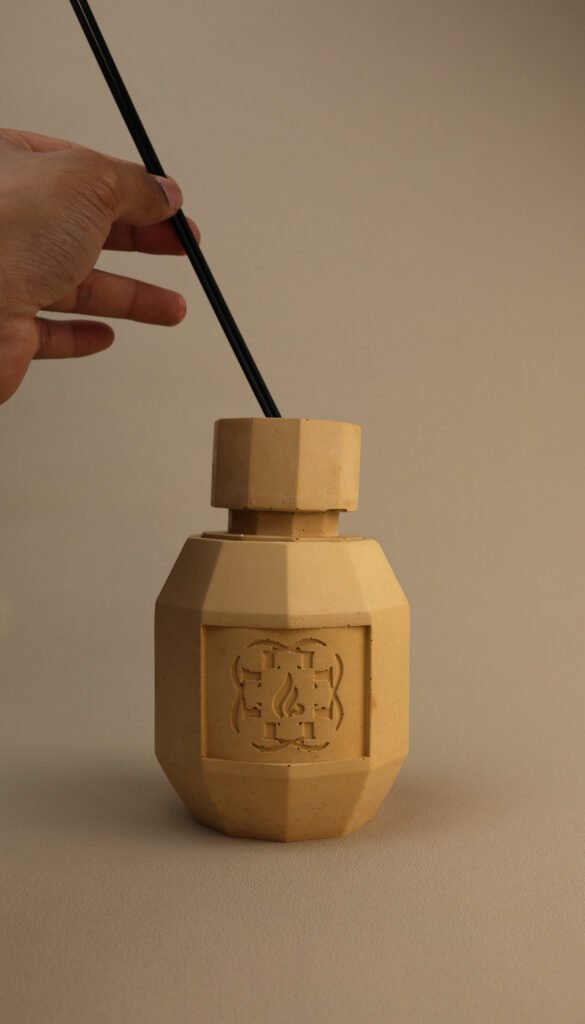
The Flamme d’Élixir mineral composite vessels are hand cast using mineral composite eco resin — a formulation that contains genuine marble and sandstone minerals. They have the weight, the cool surface temperature, and the surface variation of real stone because they contain it. You feel the difference the moment you hold one.
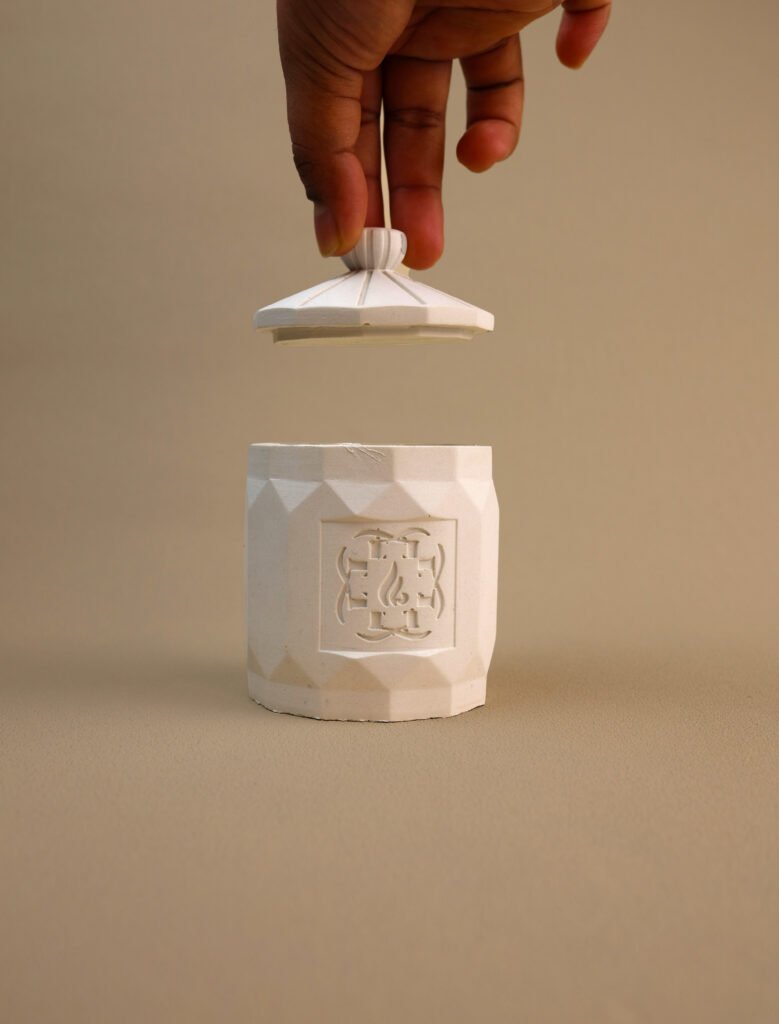
Signal 2: The Proportions Have Been Decided, Not Defaulted
Look at the dimensions of the object carefully.
Are these the minimum acceptable proportions — the height and diameter of a standard mould, the dimensions of convenience? Or are they specific? Do they reflect a design decision someone made deliberately?
A vessel whose proportions reference an architectural tradition, a formal intention, a specific material consideration — that vessel has dimensions that belong to it alone. You can often feel the difference between a designed proportion and a convenient one without being able to explain why.
The twelve-sided geometry of the Flamme d’Élixir vessel is not a default. The dodecagon — a twelve-sided polygon — is one of the most significant forms in architectural history. It appears in Gothic cathedral rose windows, in Islamic geometric tilework, in the baptisteries of Florence. It is the closest regular polygon to a perfect circle while retaining visible facets. That design decision produces an object that reads as soft and organic from a distance — and reveals its precise geometric architecture as you approach.
That is a designed proportion. You feel it before you understand it.
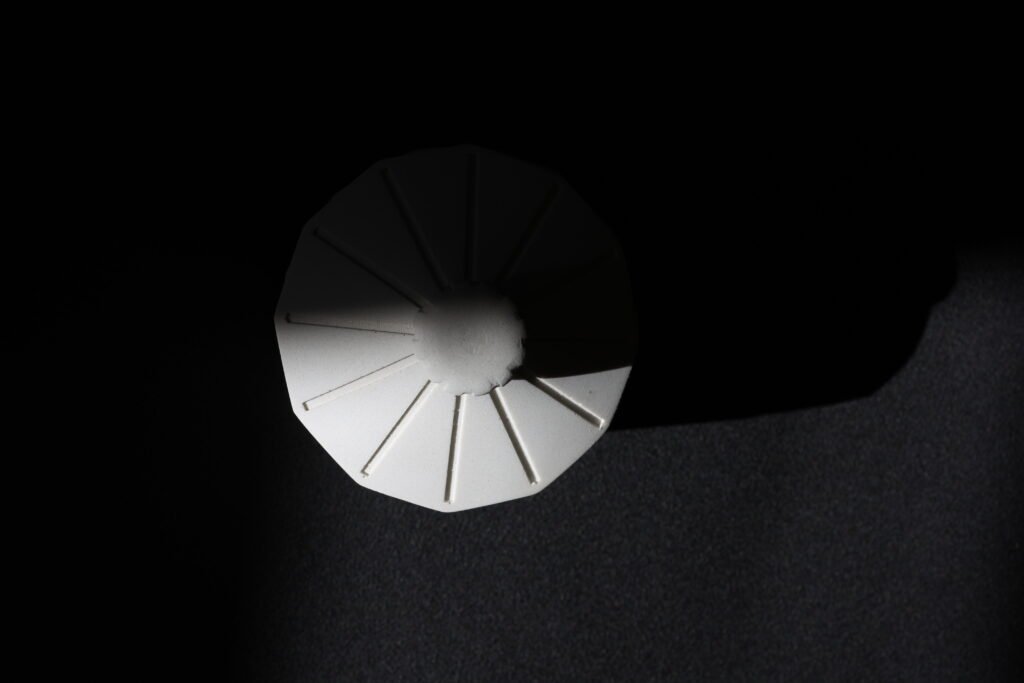
Signal 3: You Know Who Made It and Where
A design object worth keeping has a maker you can locate and a place of origin you can name. Flamme d’Élixir objects are made in Bordeaux by Charitha and Sreeharsha. Every vessel is hand cast and hand finished. Every piece is unique. That is a complete provenance story in two sentences.
Compare that to the typical luxury home décor brand — objects designed in one country, manufactured in another, finished somewhere else, with no specific maker whose hands this work represents. Traceability is a quality signal before it is anything else. The provenance of an object tells you something about how seriously it was made.
When Flamme d’Élixir says Bordeaux origin, it means the workshop is in Bordeaux. When it says Grasse fragrance, it means the fragrance oils are sourced from verified Grasse suppliers. These are not marketing claims. They are verifiable facts.
Signal 4: You Can Imagine It in Your Home in Ten Years
Ask the question directly.
Is this object beautiful because of what it is — or because of what is currently fashionable?
Natural stone objects, well-proportioned architectural forms, and genuine craft objects pass this test consistently. Their appeal does not depend on a current colour story or a passing style vocabulary. Marble was beautiful in Roman domestic spaces. It is beautiful now. It will be beautiful in 2045.
Trend-responsive objects — the ones whose appeal lives entirely in the present cultural moment — do not pass this test. They look dated the moment the trend that made them appealing moves on.
Before you buy, ask: would this have been beautiful twenty years ago? Will it be beautiful twenty years from now? If the honest answer to both is yes — buy it. If not — wait.
The Objects That Almost Always Repay Investment
Not every category of home object rewards serious investment equally. Some things are genuinely disposable — buy them cheaply, replace them without guilt. Others accumulate meaning and value over time and deserve a different approach. Lasting home decor objects almost always belong to one of these three categories.
A Sculptural Stone Vessel
Marble, sandstone, travertine — natural stone objects age beautifully. They develop patina. They are visually compelling from every angle. Their quality is immediately apparent to any observer without explanation. And they are completely independent of trend cycles.
A well-chosen stone vessel — or a mineral composite vessel containing genuine stone minerals — will still be on your shelf in twenty years looking exactly as considered as it did the day you bought it. Probably more so.
A Handmade Ceramic from an Identified Maker
The handmade ceramic market has expanded significantly in the last decade as buyers have moved away from mass production toward objects with genuine human origin. The craft revival has produced some extraordinary work. What to look for: a maker whose name you know, whose process you can trace, whose form is specifically their own rather than a version of a generic category shape. That specificity is what produces an object that remains interesting over time.
A Real Book About Something That Matters to You
Books are the most underrated investment objects in home decorating.
A book from a publisher or author whose work you respect — on architecture, on design, on natural materials, on fragrance, on the history of objects — does several things simultaneously. It is visually strong on a shelf. It is intellectually useful. A book signals something specific about who you are and what you value. And it never goes out of date.
Phaidon, Rizzoli, and Thames and Hudson publish consistently at the level worth investing in.
How to Build a Home That Has a Story
The homes that feel genuinely exceptional — the ones you walk into and immediately sense have been built by someone with real taste and real intention — share one characteristic.
They are not full.
They have space between objects. Each piece can be seen properly. Nothing competes with everything else for attention. And the objects that are there have been chosen because of something specific — a material story, a maker story, a formal quality, a personal significance.
Building that kind of home takes patience more than money. The patience to pass on a mediocre object even when you want something new. The patience to wait for the right piece. The choice to live with empty space rather than fill it with something you will regret.
That patience is a skill. And like all skills — it develops with practice.
Start with one object you genuinely believe in. One piece you can explain — why the material, why the form, why this maker, why now. Put it somewhere you will see it every day. Notice how differently you feel about it in six months compared to how you feel about everything else you bought that year.
That difference is what considered decorating produces. Not a full home. A meaningful one.
The Flamme d’Élixir Approach to Objects
Every Flamme d’Élixir vessel is made to pass all four of the tests described above.
The material is genuinely what it appears — mineral composite containing verified marble and sandstone minerals, with the weight and surface temperature of real stone. The proportions have been decided — twelve-sided geometry referencing centuries of French architectural stone tradition, with specific dimensions that belong to this object alone.
The maker is traceable — hand cast and hand finished in Bordeaux, by identified makers, in a workshop where every piece is unique. And it passes the ten-year test — because architectural form and natural stone have been beautiful for centuries and will remain so.
Explore the Flamme d’Élixir collection
In Summery
Decorative objects worth keeping for decades share four qualities: the material is genuine and natural (stone, solid wood, aged metal), the form does not reference a specific trend period, the finish improves with age rather than degrading, and the object has a clear afterlife once its first function is complete. Of all materials, natural stone — marble, sandstone, limestone — is the most reliable choice for permanent, lasting decorative objects.
Frequently Asked Questions
What makes a home décor object worth the investment?
Four things — and they all have to be present together.
The material must be genuinely what it appears to be. Pick the object up. Does it have the right weight? The right temperature? The right surface variation? If yes — the material is real.
The proportions must have been decided, not defaulted. Do these dimensions belong to this object specifically, or are they the minimum acceptable dimensions of a standard category product? The maker must be traceable. Can you name who made this and where? Can you find that person or workshop if you wanted to? Traceability is a quality signal before it is anything else. And the appeal must be independent of current trends. Would this object have been beautiful twenty years ago? Will it be beautiful twenty years from now? If the answer to both is yes — it is worth significant investment.
Objects that pass all four tests will remain valuable — aesthetically, emotionally, and sometimes financially — for decades.
Is natural stone home décor a good investment?
Yes — consistently and reliably.
Natural stone ages well. It develops patina rather than degrading. It is visually compelling from every angle and in every light condition. Its quality is immediately apparent to any observer without explanation. And it sits completely outside the trend cycles that make other materials temporarily relevant and then permanently dated. Marble design objects, a sandstone vessel, or a mineral composite piece containing genuine stone minerals — chosen well and placed with intention — will still be on your shelf in twenty years looking as considered as it did the day you brought it home.
Probably more so. Because by then it will have a story.
What are the best home decor investments in 2026?
In 2026 the most consistently rewarding home decor investments are natural and mineral stone objects, handmade ceramics from identified makers, and architectural vessels with traceable provenance. These categories share one characteristic — their appeal is independent of trend cycles. They were excellent choices twenty years ago and will remain excellent choices twenty years from now. The investment piece philosophy — fewer objects chosen with greater care — consistently outperforms volume decorating both aesthetically and financially. The best home decor investment 2026 is not a category or a price point. It is a decision to buy once, buy well, and keep permanently.
What are the design objects worth spending money on in your home?
Start with the objects you interact with every day and see from every angle.
A vessel that sits on your most visible shelf. A fragrance design objects that changes the atmosphere of your main living space. A ceramic or stone piece that anchors a surface you look at constantly. These are the objects worth spending money on — not because they are the most expensive, but because they do the most work. They shape how you feel in your home every single day. The return on that investment is felt daily, not occasionally. Everything else — the things you barely notice, the things that fill space rather than define it — buy those cheaply. Save the serious investment for the objects that genuinely matter to how you live.
How do I know if a home décor brand is genuinely artisan?
Ask three questions.
Can they tell you specifically who made the object and where? Not the country of manufacture — the workshop, the maker, the process. Flamme d’Élixir objects are made in Bordeaux by Charitha and Sreeharsha. That is a specific answer. Can they show you the making process — not a styled brand video, but the actual process of how the material is formed and finished?
Is every piece genuinely unique — and if so, can they explain why? Hand finishing from genuine mineral composite produces natural variation that cannot be replicated. That variation is the proof of process.
If a brand can answer all three questions specifically and verifiably — it is genuinely artisan.
How do I avoid buying home décor I will regret?
One question before every purchase.
Not — do I like this? You already know the answer or you would not be considering it.
The question is — do I know why I like this? Do I know what the material is and why it performs well? Can I describe the proportions and why they work? Can I name the maker and trace the origin?
If you cannot answer those questions — you are buying appearance. Appearance fades. The patience to wait for an object you can genuinely explain is the most valuable decorating skill you can develop.
Read more about the Flamme d’Élixir design philosophy
What is the difference between a design object and a decorative object?
A decorative object exists to fill space and provide visual interest. It performs its function adequately as long as it is present and reasonably attractive. When it stops being current — when the trend that made it appealing moves on — it stops working and gets replaced.
Design objects exists because of a specific formal decision. It has proportions that belong to it alone. A material chosen for specific reasons. A maker whose process produced it and no other object quite like it. It does not depend on cultural currency for its appeal because its appeal is structural — built into the form and material rather than borrowed from current taste.
Design objects last. Decorative objects cycle.
The best home collections contain both — but the objects that give a home its lasting character are always the design objects. The ones chosen for reasons that will still be valid in twenty years.
Flamme d’Élixir is a design-led fragrance house based in Bordeaux. Every vessel is hand cast from mineral composite in stone finish and filled with fragrance of certified Grasse provenance. Each piece is unique.
Leave a Reply