
Stop Decorating. Start Collecting.
The difference that changes everything about how you approach your home
Decorating and collecting are not the same thing. The difference is what determines how your home feels.
Decorating is the act of arranging objects to create a visual effect. It is composition-first — how things look in relation to each other, on a surface, in a photograph. It produces rooms that are coherent from a distance and sometimes hollow up close: beautiful as an image, but without the weight that comes from genuine materials and genuine decisions. So stop decorating start collecting.
stop decorating start collecting
Collecting is something entirely different. It is the slow, deliberate accumulation of objects chosen for reasons beyond their role in a visual arrangement. Collected objects carry provenance — they come from a specific place, and a specific maker creates them for reasons that can be clearly articulated. They use materials that honestly express what they are. They earn their place in a room through quality and story, not just through visual contribution.
stop decorating start collecting
The phrase ‘collected, not decorated’ has become a defining concept in 2026 interior design editorial — used by Emily Henderson, Domino, StyleBlueprint, and multiple other major sources to describe the quality that distinguishes the best current interiors from their well-styled but ultimately hollow predecessors.
What a Decorated Room Looks Like (And What It Feels Like)
A decorated room is composed with skill. The objects on the coffee table are the right heights, the right textures, the right colour relationships. The shelf has the right books, the right neutral vessel, the right small plant. Everything balances. In a photograph, it is perfect.
In person, something is often missing. The objects have no particular story.Designers chose them because they worked in the composition. You could replace them with similar objects without the room losing anything essential. Nothing on the surface tells you much about the person who lives there. The room is beautiful but not personal. Styled but not inhabited.
What a Collected Room Looks Like (And What It Feels Like)
A collected room may or may not be styled in the conventional sense. The objects on the shelf are there because each one means something — not to the shelf composition, but to the person who chose it. The marble vessel on the console came from a design studio in Bordeaux whose story you can tell in three sentences. The ceramic next to it was made by a maker whose process you know. The book is there because you have read it more than once.
The collected room has weight. It rewards looking closely. It gets better over time as the collection deepens. And crucially, it feels inhabited — genuinely, honestly lived in by someone who made real decisions about what deserves space.
Read more about Rise of collectable design
How to Shift From Decorating to Collecting
Step 1: Edit before you add
The first step is removal, not purchase. Look at the objects on your most-styled surface — your coffee table, your main shelf, your entrance console. Ask of each object: do I know where this came from? Can I tell a story about it? Is it made from a material I would choose again, knowing what I know now? If the answer to all three is no, the object is décor. Remove it. The space it leaves is an invitation for something better.
Step 2: Buy one thing at a time, slowly
The collecting mindset operates at a different pace from the decorating mindset. A decorator fills a room in a weekend. A collector builds one over years — sometimes decades. Each acquisition is considered: this object, at this price, from this maker, with this story. The gap between acquisitions is part of the process. It is how you ensure that each object you add is genuinely wanted, not simply convenient.
Step 3: Prioritize provenance
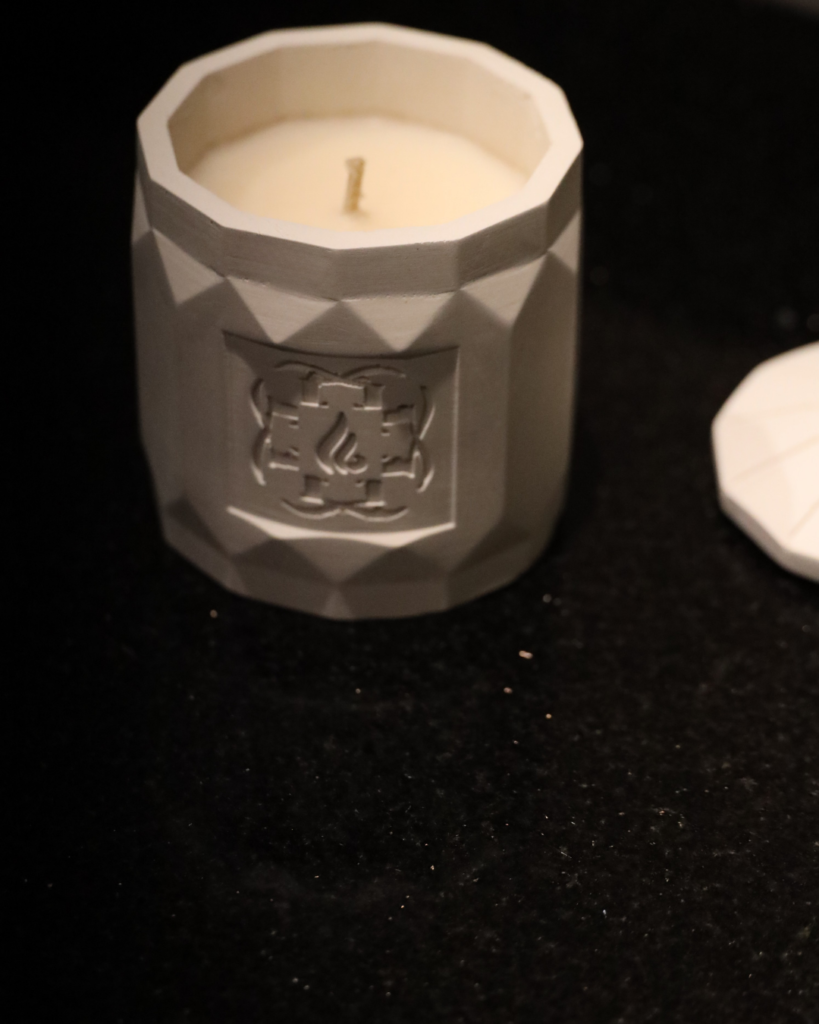
A single factor predicts an object’s long-term value — aesthetic, emotional, and sometimes financial — more reliably than anything else: someone with a genuine point of view must make it, use real materials, and root it in a specific place. Provenance draws the line between a mineral stone fragrance object crafted in Bordeaux by its founders, infused with fragrances from Grasse, and a glass jar candle produced in an undisclosed factory with synthetic scent. Both are objects. Only one is collectible.
Step 4: Choose objects that get better over time
Natural materials age. Marble develops patina. Sandstone absorbs the warmth of a room. Stone objects that sit in a space for years develop a presence that new objects cannot replicate — they carry the memory of the light that once lit them, the hands that held them, and the conversations that unfolded around them. Choose objects that age rather than degrade. Choose objects that will be worth more to you in ten years than they are today.
Checkout our Collections at Flamme d’Élixir.
In Summary
Decorating fills spaces. Collecting builds them. The shift from decorating to collecting begins with a single changed question: not ‘does this fit here?’ but ‘would I still want this in ten years?’ Objects that answer yes tend to share three qualities — genuine natural material, a form that does not follow a specific trend, and a maker whose name and address you could find. These are the objects worth bringing into your home. So stop decorating start collecting.
Frequently Asked Questions
What does ‘collected not decorated’ mean in interior design?
“Collected, not decorated” describes an approach to interior design that prioritizes provenance, material quality, and personal meaning over mere visual composition. This philosophy builds a collected interior slowly and deliberately, choosing objects for the stories they carry — rather than creating a decorated space that may appear beautiful but lacks the substance of genuine decisions and authentic materials.
How do I make my home feel more collected and less decorated?
Begin by editing: remove objects you cannot tell a story about. Then replace them slowly, one at a time, with objects that have genuine provenance — made by a specific maker, from a specific material, with a specific intention. Prioritise natural materials, small-batch production, and objects whose formal quality you can see and feel.
Is collecting design objects expensive?
Collecting is not inherently more expensive than decorating — but it requires a different distribution of the same budget. Rather than buying many affordable objects, collecting means buying fewer objects of genuinely higher quality. The cost per object is higher; the total number of objects is lower. Over time, a collected home costs less to maintain than a decorated one, because its objects endure — you don’t need to replace them.
Leave a Reply